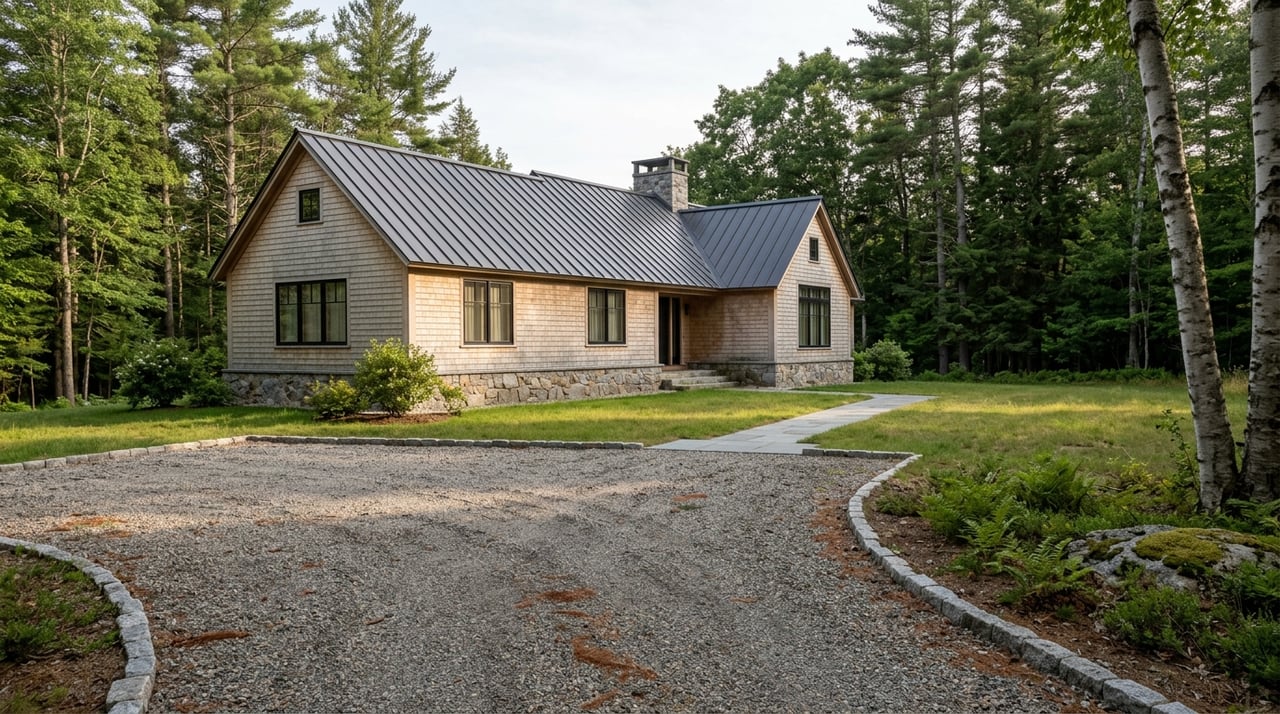
Dreaming about a quiet cabin near the water is the easy part. The harder part is making sure the land can actually support the cabin you have in mind. If you are looking at land in Maine’s Lakes Region or nearby Southern Maine towns like Berwick, the smartest move is to check buildability before you fall in love with the setting. This guide talks you through the key issues that shape cabin-land purchases, from access and frontage to septic, water, and shoreland rules. Let’s dive in.
Start With Buildability
When you buy land for a cabin, the first question is not how the cabin will look. It is whether the parcel can legally and practically support a home. That means confirming access, frontage, zoning, and whether the lot meets local dimensional standards.
In Maine, shoreland zoning can affect a large number of cabin lots. State law applies shoreland zoning within 250 feet of great ponds, rivers, saltwater bodies, coastal and freshwater wetlands, and within 75 feet of certain streams. Municipalities must adopt shoreland ordinances that are consistent with or stricter than the state minimums.
That matters because a waterfront or water-adjacent parcel may come with more restrictions than a standard inland lot. Before you think about floor plans or builders, you want to understand what the land allows.
Check Access and Frontage Early
A parcel can look perfect online and still run into major issues on paper. One of the biggest early checks is whether the lot has proper frontage and legal access. Without that, your cabin plans may never get off the ground.
In Berwick, for example, a lot must have frontage on a public street, right-of-way, or private way. The ordinance also says land in a deeded right-of-way cannot be used to meet dimensional requirements. So even if a parcel appears large enough, the usable area may be smaller than you expect.
If the property is in a shoreland district, frontage and lot-size rules can be stricter. Berwick’s shoreland table lists 40,000 square feet as the minimum lot area and 200 feet of frontage in RP, LR, and SP districts, while the Shoreland Commercial Industrial district shows 10,000 square feet and 100 feet of frontage.
Understand the Parcel’s Legal Status
You also want to know how the lot was created. In Maine, dividing a tract into 3 or more lots within any 5-year period is generally considered a subdivision. That can change the approval path and the build timeline.
Local subdivision rules may also affect permit phasing or annual permit limits in certain districts. In practical terms, a lot’s subdivision status can influence whether your project is a straightforward build or a more layered process.
This is why the land-use file matters just as much as the listing sheet. A good cabin parcel is not just scenic. It also needs a clear legal path to development.
Water and Septic Often Decide Everything
For many cabin lots, water and wastewater are what make or break the project. A parcel may have beautiful surroundings, but if it cannot support a septic system or a reliable water plan, it may not be the right fit.
In Maine, private wells are not regulated by the state in the same way public systems are. The owner is responsible for testing and treating the water. Maine CDC recommends annual testing for coliform bacteria, E. coli, nitrates, and nitrites, along with broader testing every 3 to 5 years for other contaminants. It also recommends testing when buying a new home.
For wastewater, Maine CDC says a soil test or site evaluation is needed any time sewage, wastewater, or human waste will be placed beneath the ground where none existed before. That includes first-time development. If a site evaluation is required, a permit to install the system is also required before construction begins.
Why Site Evaluation Matters
A site evaluation is one of the most important steps in buying cabin land. It helps determine whether the lot has suitable soil conditions for a subsurface wastewater system. Without that approval, your build may stop before it starts.
Berwick’s ordinance reinforces this at the local level. If a lot is not served by public sewer, building permit approval is subject to a completed HHE-200 site evaluation showing adequate soil conditions. The ordinance also says each proposed lot generally must have its septic system within its own boundaries.
This is one reason raw land should never be judged by appearance alone. Dry-looking ground, pretty woods, or a level clearing do not tell you whether the site will work for wastewater.
Coordinate Well and Septic Placement
Well and septic planning should happen together, not separately. Maine well-driller rules require minimum separation distances between water supply wells and wastewater disposal fields. That includes 100 feet from disposal fields treating less than 2,000 gallons per day and 300 feet from larger fields.
Those spacing rules can be especially important on smaller lots or irregularly shaped parcels. A lot may technically exist on paper but still be difficult to use efficiently once setbacks and separation requirements are applied.
In some cases, public water may also come into play. Berwick states that a new residential use requiring a building permit and located within 500 feet of a public water line must be served by public water.
Know That Permits Happen in Stages
Buying land for a cabin is not a one-permit process. It usually involves multiple approvals, and each step depends on the one before it. That is why early planning saves time, money, and frustration.
In Berwick, a plumbing permit, building permit, and or certificate of occupancy may be required for buildings, structures, land uses, and sanitary facilities. A complete application must describe the proposed structure, include owner and contractor information, state the value and intended use of the work, and include plumbing documentation when there is no public sewer.
The code enforcement officer generally has 10 days to issue or deny a conforming permit. A permit lapses if no substantial start is made within one year and construction is not completed within five years.
Planning Board Review Can Change the Timeline
Not every lot goes straight to permit issuance. Berwick says no building permit may be issued if the town knows the structure would be in an unapproved subdivision or would violate state law or local ordinance. Projects that need conditional use or site plan review go to the Planning Board before permits are issued.
For buyers, this means you should think beyond the asking price. You also want to understand whether the lot is likely to move through a simple permit path or a more involved review process.
That distinction can affect not only timing, but also design flexibility. On sensitive lots, the land may shape the cabin more than your wish list does.
Shoreland Rules Can Affect Cabin Design
Cabin buyers are often drawn to lots near ponds, streams, and wooded shorelines. Those settings are beautiful, but they can also trigger stricter local review. In shoreland areas, clearing, roads, and driveways may face additional limits.
Berwick’s ordinance says roads and driveways in Resource Protection Districts are generally prohibited unless the Planning Board finds there is no reasonable alternative route or location. That is a major detail if your dream lot depends on crossing or accessing a protected area.
This does not always mean a lot is unusable. It does mean the land should be screened carefully before you commit.
Use a Realistic Cabin Timeline
Most cabin builds move in phases, not in one straight line. The practical order is usually to verify access and zoning, confirm whether the lot is in shoreland or subdivision review, obtain a site evaluation and septic design, line up water, and then file the local permit package before major site work starts.
That sequence lines up with Maine septic rules and Berwick’s permit requirements. Maine plumbing and septic permits are valid for work commenced within 24 months after issuance, while Berwick’s land-use permit lapses if no substantial start is made within one year.
In other words, the biggest delays often come from the land itself, not from construction. A parcel that already checks the right boxes can save you significant time.
Be Careful When Hiring for the Build
Once the parcel makes sense, the next step is assembling the right professionals. In Maine, the Attorney General notes that general contractors and trades such as roofing and framing are not licensed or regulated by the state. That makes references and clear written scopes especially important.
Maine also requires a written home-construction contract for work over $3,000. The contract must include the price, scope, estimated start and end dates, materials, and warranty terms.
For septic work, the Attorney General notes that site evaluators are licensed, while septic installers themselves do not have to be licensed. That is another reason to stay organized and ask careful questions as you build your team.
A Smart Cabin Purchase Starts Before Design
The best cabin deals are not always the most obvious ones. Sometimes the right lot is the one with fewer surprises, better access, a workable septic plan, and a clearer permit path.
If you are buying land in Maine’s Lakes Region or nearby Southern Maine markets, a calm and informed approach can protect your budget and your timeline. When you understand access, water, wastewater, and shoreland rules upfront, you can make decisions with far more confidence.
If you are considering land or a future cabin build in Southern Maine, Bailey Pate can help you evaluate the opportunity with local insight, clear communication, and a practical plan.
FAQs
What should you check first when buying cabin land in Maine?
- Start with access, frontage, zoning, and whether the lot appears to meet local dimensional requirements before moving on to cabin design ideas.
How does shoreland zoning affect cabin land in Maine?
- Shoreland zoning can apply within 250 feet of great ponds, rivers, saltwater bodies, coastal and freshwater wetlands, and within 75 feet of certain streams, which may affect setbacks, clearing, roads, and development options.
Why is a site evaluation important for a Maine cabin lot?
- A site evaluation helps determine whether the soil can support a subsurface wastewater system, and it is required for first-time development when wastewater will be placed below ground.
Can a Maine land parcel fail even if it looks large enough?
- Yes, because frontage rules, right-of-way limits, unusable areas, and local dimensional standards can reduce whether the lot actually qualifies as buildable.
How long do permits last for a cabin project in Berwick, Maine?
- Berwick land-use permits lapse if no substantial start is made within one year and construction is not completed within five years, while Maine plumbing and septic permits are valid for work commenced within 24 months after issuance.
What should you know about wells when buying Maine cabin land?
- Private wells are the owner’s responsibility, and Maine CDC recommends testing when buying a new home, annual testing for key bacteria and nitrate indicators, and broader testing every 3 to 5 years for other contaminants.