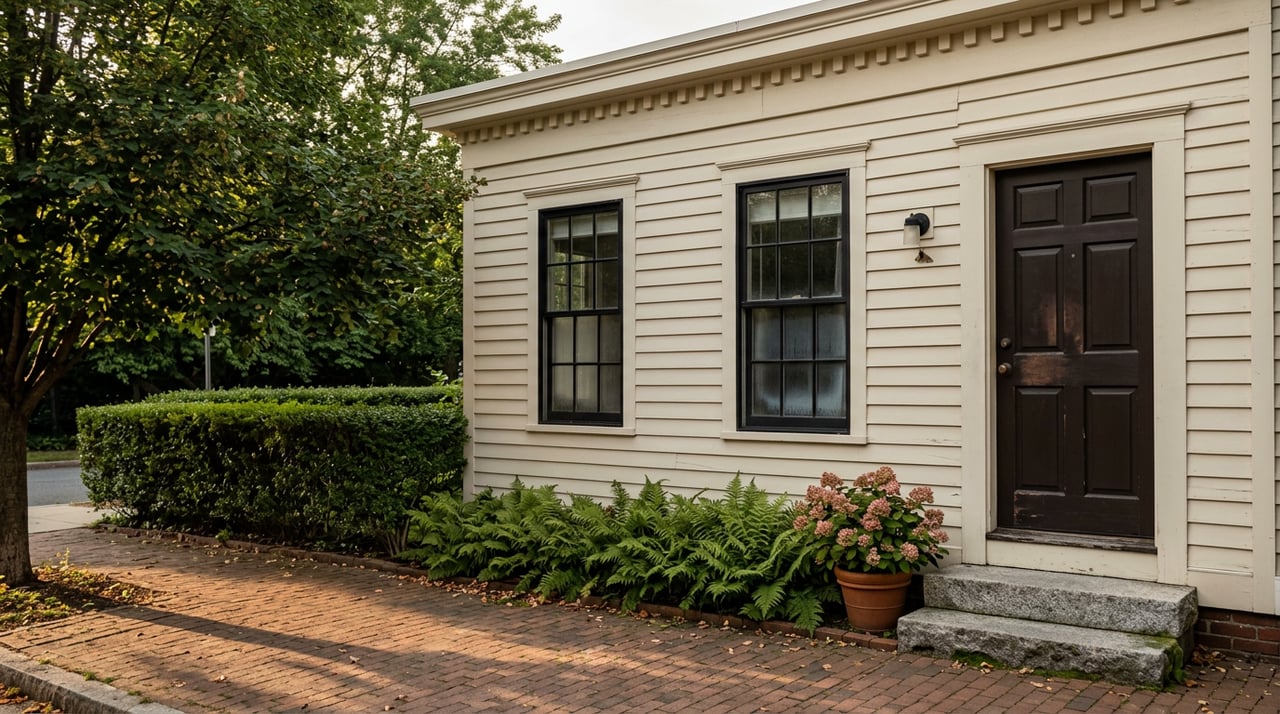
Congress Street does something odd right before it reaches Munjoy Hill. It runs straight and purposeful past the coffee shops and the salon and Union Bagel, then it simply stops, dead-ending into grass and harbor light at the Eastern Promenade. There is no rotary, no merge, no sign telling you where to go next. The street just ends, and the neighborhood begins.
That dead end is a decent metaphor for how a Thursday night here actually works. Munjoy Hill does not run on one event. It runs on three separate schedules that happen to overlap for about two hours every week in summer, and if you know when each one starts, you stop needing a plan at all.
Fort Allen Park, Now in Its Seventh Summer of Doing This on Purpose
That grass where Congress Street runs out is Fort Allen Park, the section of the Eastern Promenade with the widest sweep of Portland Harbor. This is Olmsted-designed ground, laid out by the same firm behind Baxter Boulevard, and it has a bandstand that Friends of the Eastern Promenade, the nonprofit that stewards the park, has turned into the anchor of the neighborhood's summer.
This year marks the seventh run of their Summer Community Concert Series, free Thursday evenings at the bandstand with a different genre each week and food trucks parked along the grass. August alone has moved from country to blues to classic rock: Cattle Call opened the month on August 6, The Blues Prophets played rhythm and blues on August 13, and Misspent Youth plays a classic rock set on August 20. Nobody buys a ticket. Nobody reserves a spot. People show up with lawn chairs and blankets and let the evening arrange itself around them.
What makes the series worth knowing about isn't just that it's free. It's that Friends of the Eastern Promenade has now run it long enough, and varied it deliberately enough, that it reads less like a summer program and more like a neighborhood institution with its own internal calendar. A retiree who came for the blues set is standing next to a loved one that came for the food truck. Nobody planned that convergence. The lineup did it for them.
When the set ends and the crowd starts to fold up chairs, a good number stroll further along the Prom to the Loring Memorial, the monument dedicated to Korean War pilot Charles J. Loring Jr., where the view opens over Back Cove and on a clear evening you can pick out Mount Washington, some 70 miles away in New Hampshire. It is the unofficial closing number of the night, no bandstand required.
The Beach That Changes Its Mind at 5
A few minutes down the trail toward Cutter Street, East End Beach spends its days as a swimming beach. There is a boat launch, a mooring field, changing areas, and by afternoon a crowd of folks who came for the water and the view across Casco Bay toward the islands and the lighthouse.
Then 5 p.m. arrives, and the beach quietly becomes something else. Under the posted rules that run Memorial Day through Labor Day, dogs are kept off the sand for most of the day and let loose, under voice control, before 9 a.m. and after 5 p.m. The same stretch of shoreline that hosted a swim lesson at 2 o'clock is a dog beach by dinnertime, and the regulars know exactly which hour they are showing up for. It is not a compromise the city stumbled into. It is a working schedule, and Munjoy Hill residents have built their evening stroll around it for years, timing their loop so the show at the bandstand and the shift on the sand land in the same stretch of daylight.
If you time it right, you catch the handoff itself: the last swimmers toweling off while the first leashes come unclipped, with the Maine Narrow Gauge Railroad's small excursion train rattling past on the tracks that still run along the shore, a route the railroad has operated on this stretch of the Prom for years.
Congress Street's Neighborhood Rhythm
By the time the concert lets out, the third clock has already been running for a while, the one on Congress Street itself.
As the Portland Press Herald reported, the space at 89 Congress Street held Blue Spoon, a farm-to-table bistro that eventually packed up and relocated to Rockland. What replaced it tells you something about what this stretch of the Hill actually wants from its restaurants now. Britt Langford and her husband Leo Zhang, who already run Jing Yan across the street, opened a small, deliberately unfussy bar there called Low Key, seating about 25 people, built around natural wine, draft beer, simple twists on classic cocktails, and a soft-serve ice cream window that runs takeout in the warmer months. Langford told the Portland Press Herald:
"Our main purpose for opening this is really for the neighborhood, above all else. They really supported us through the pandemic and beyond."
That is not marketing language. It is a small business owner naming her actual customer base, and it matches what a stroll down Congress Street tells you anyway. A few doors down, Munjoy Hill Tavern has held the corner at 189 Congress since 2016, in a space that used to be Mama's Crow Bar, and it has kept its dive bar reputation intact, right down to the outdoor bar area where local bands still play sets on busy nights. Both offer a reason to walk somewhere on a Thursday.
If the weather turns, there is a fourth option nobody plans around but everyone knows exists: The Hill Arts, formerly St. Lawrence Arts Center, sitting near the crest of the hill and running Good Theater productions and other performances year round, rain or shine, concert or no concert.
Why the Clocks Matter More Than the Calendar
None of this is new construction or a grand opening dressed up as news. The concert series is seven years old. The tavern has been on that corner for a decade. Even Low Key, the newest name on this list, has been serving the neighborhood since a bar named for a farm-to-table restaurant that left town.
Munjoy Hill has always operated on its own clock rather than downtown's. The neighborhood organization that represents it, based a few doors from Low Key at 92 Congress Street, still holds its board meetings the first Monday of every month and its annual gathering each June, the same rhythm it has kept for years while it works to protect a neighborhood that was built, in the Munjoy Hill Neighborhood Organization's own description, by and for mid-19th century workers and that briefly went by the name "Mount Joy" before reverting to the one it carries today.
That continuity is the actual finding here. A Thursday on Munjoy Hill isn't a series of separate plans that happen to land in the same evening. It's a beach that knows what hour it is, a bandstand that has spent seven summers building a habit, and two bars a few doors apart that keep the evening rooted in the neighborhood. Know the three clocks and you stop needing a reservation, a ticket, or a reason to leave the neighborhood at all.
If you're already living this rhythm and thinking about what comes next for your own place on the Hill, or anywhere else in Southern Maine, Bailey Pate is happy to talk it through. Get in Touch.
This article is general information, not legal, tax or financial advice. Consult a qualified professional about your situation.